Contact us via WhatsApp

Digital Product

Flow and Continuous Improvement in Product Teams

Stop putting out fires and have your teams sustain the pace of delivery.

Clear agreements, visible work and teams that coordinate without escalating every conflict. And an improvement habit that carries on once we are gone.
Deliveries that hold, without living in emergency mode.

Many product teams work hard and move little: priorities change halfway, work is left half done, rework eats the time and every delivery costs more than it should.

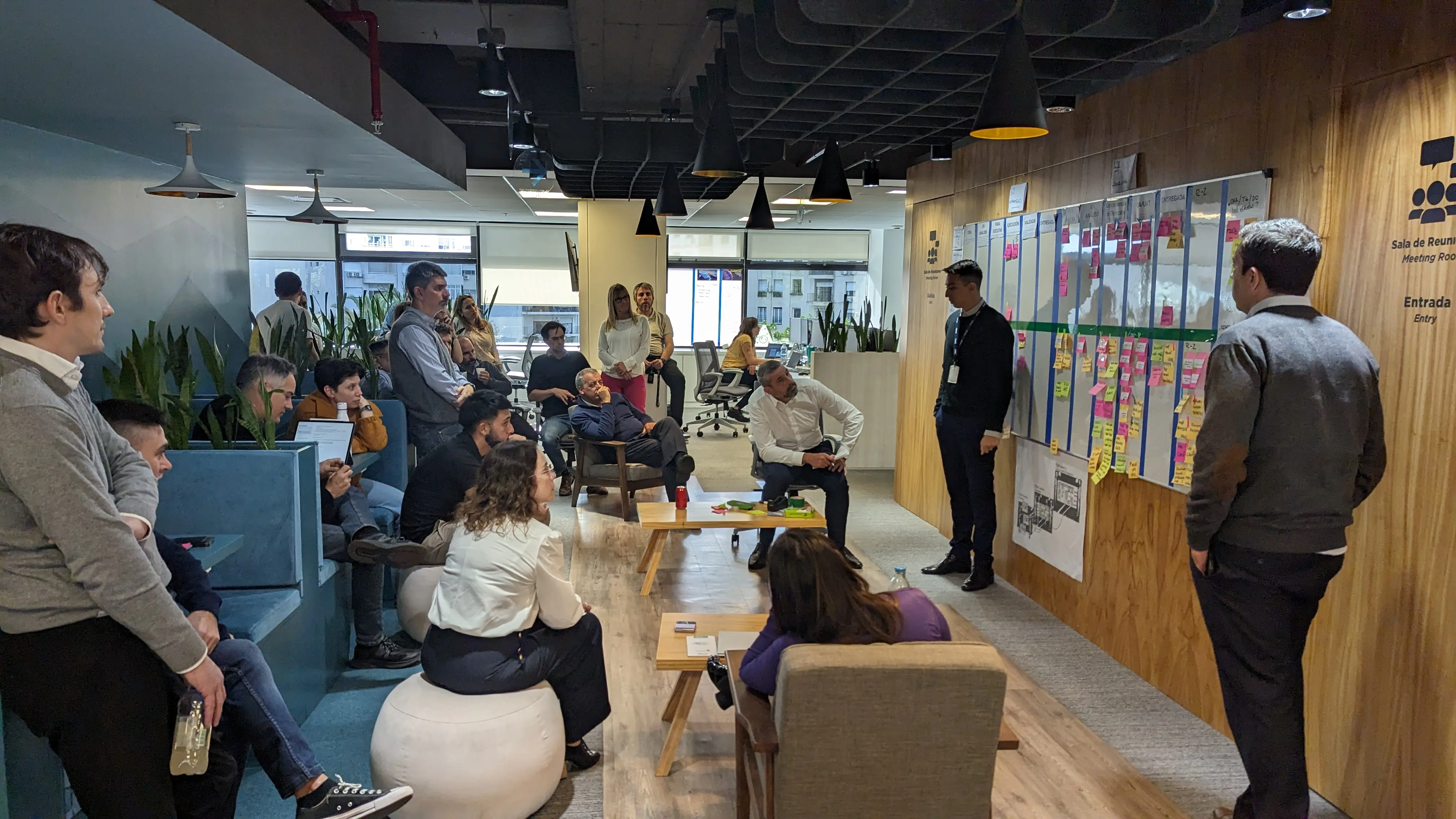
We work inside the teams, on their daily operation. We make visible where the work flows and where it gets stuck. We agree on how decisions are made and how people collaborate, above all within the trio of product management, design and technology. And we leave in place an improvement habit the team sustains on its own. The result: less half-done work, deliveries that are met, and more time for what moves the business.

Benefits of Flow and Continuous Improvement in Product Teams

check

More predictable deliveries: the team knows how much work it can take on and delivers what it commits to.

check

Less rework: causes are detected and attacked, not just symptoms.

check

Focus: less half-done work and fewer priority changes along the way.

check

A trio that decides together: product management, design and technology coordinate before building.

check

Teams that coordinate: conflicts between teams get solved where they happen, without escalating each one to whoever leads.

check

Improvement as a habit: the team keeps identifying and solving problems without depending on us.

The service Flow and Continuous Improvement in Product Teams covers:

Flow diagnosis

We look at how work comes in, moves and goes out, where it gets stuck and how much rework there is. It is part of the two-week diagnosis every engagement in Digital Product starts with.

Working agreements and focus

We define with the team how work is prioritized, how decisions are made and how much work is taken on at a time.

Kanban

The team sees its work, its blockers and its times, and limits how much it takes on at a time: less half-done work and predictable deliveries.

Lean

Waits, handoffs and corrections that add no value are identified and removed at the root.

Product trio

Product management, design and technology work together from discovery to delivery.

Coordination between teams with Flight Levels

We design with the leaders how teams coordinate with each other and with the strategy: which work is looked at on each level, who decides and how often. That way conflicts between teams get solved where they happen, without escalating each one to whoever leads.

Toyota Kata

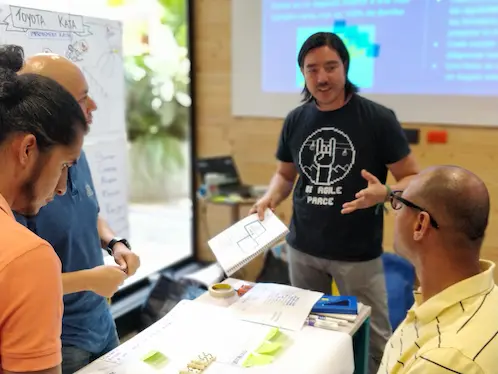
Short experiment cycles towards concrete targets, until improving becomes the team's routine.

Handover

We leave agreements, guides and people on the team able to sustain and extend the practice.
Who is the service Flow and Continuous Improvement in Product Teams intended for?

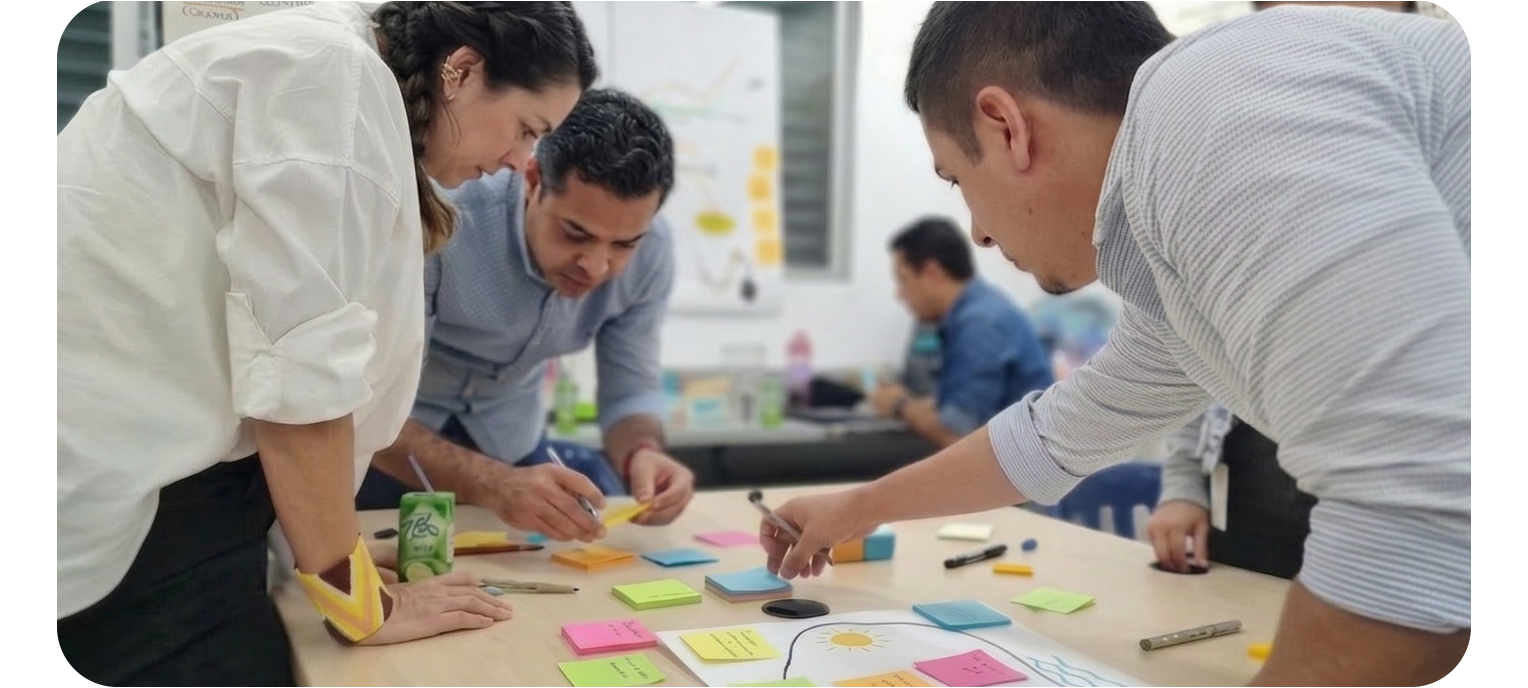
One or several teams that build digital products, and their leaders, when they deliver with effort but without a sustained pace: lots of rework, shifting priorities and the feeling of always putting out fires.

Frequently asked questions

Rarely. Today most of the teams we start working with already know Scrum and have it in place. So we almost always start without a course, with a diagnosis of how the team works, often from a retrospective. Whatever needs to be learned comes later, in short capsules on the topic the team needs.

A course makes sense when the team is new. Part of assembling it is choosing a way of working, and it is best to start from a known one:
· Scrum, when the team builds product.
· Kanban, when it does evolutionary maintenance or support.
An in-company training at the start puts everyone on the team on the same page: shared concepts, a common language and the first working agreements.
Yes, and it is the most common case. Many teams adopted Scrum long ago, but over the years the practices wear down. Some frequent signs:
· Sprints end with half-done work that rolls over to the next one.
· Urgent requests come in mid-sprint and break what was planned.
· The daily became a status report, not a coordination.
· The retrospective is one more meeting, and its actions do not get done.
· The review shows progress, but nobody from the business decides with it.

We start by assessing how the team works today and realign its minimum working agreements. Then we work with the team every week, on its real work, until the practices hold on their own.
It is a method for designing the team's work system (how much is taken on at a time, what done means, where the flow gets stuck), much more than a board. It helps reduce half-done work and make deliveries predictable.

A quick test: count how many things the team has started and not finished. If there are more than there are people on the team, the problem is not speed: the team starts more than it finishes.

If you want to know more: Kanban beyond the board (in Spanish).
It is a way of looking at work from what adds value to the customer, to identify what does not (waits, handoffs, corrections) and remove it at the root. It helps reduce rework and dead time.

A quick test: take a request the team finished recently and separate the time someone was working on it from the time it was waiting. The wait is usually most of it, and that is where the improvement is.

If you want to know more: Lean: the art of eliminating waste and the Guide to Lean improvement in services (in Spanish).
It is a model that organizes work on three levels and connects them: each team's, the coordination between teams, and the strategy. It helps several teams coordinate without depending on someone solving every conflict, and it lets a change of strategy reach everyday work.

A sign: if conflicts between teams end up on your calendar, the coordination level is missing. In the service we design it with the leaders: what is looked at on each level, who decides and how often.

If you want to know more: Flight Levels: how to coordinate teams and align them with the strategy (in Spanish).
It is a short improvement routine the team practices, guided by its leader, until it becomes a habit: where we are, where we want to get to, what the next experiment is. It makes sure improvement carries on once we are gone.

To try it: these are the 5 questions the leader asks in every improvement conversation.
1. What is the next target condition?
2. What is the current condition?
3. Which obstacles keep you from reaching it? Which one are you addressing now?
4. What is your next step (experiment)? What do you expect from it?
5. When can we go and see what we learned from that step?

If you want to know more: Continuous improvement for everyone and the Coaching Kata pocket guide (in Spanish).
If you recognize yourself in any of these lines, the bottleneck is in how the team works:
· "I don't know what my team is up to."
· "It never delivers what it commits to."
· "We struggle to coordinate with other teams."
· "There is internal friction: they can't work together."

When the lines change, the bottleneck has moved.
· "We understand what the team does, but it is very slow": it is in how it is built.
· "What we build does not move the business": it is in what to build and why.
There, the improvement no longer comes from the team's dynamics but from its relationship with the business or from the technical way of building.

This front can be hired on its own. During the diagnosis we confirm where it is best to start.
Contact

Book a meeting with our team of consultants to analyze your challenges and explore how we can help.